

Yes, This Really Happened! — South Florida's Strangest True Stories, Verified Weekly
The Weekly Pulse · Issue 3 · October 29, 2026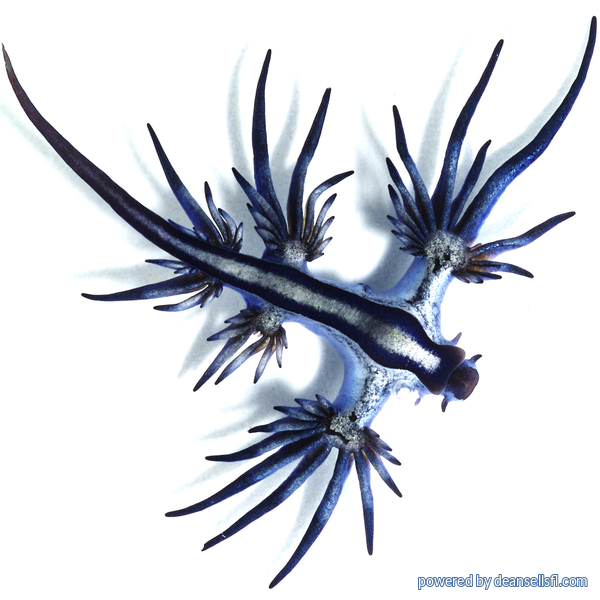
Yes, That Blue “Dragon” Found on Boca Raton and Miami Beach Sand Is Real, and It Steals Its Weapons
The animal in the photo is a blue dragon, a sea slug whose scientific name is Glaucus atlanticus. It is also called the blue sea dragon or blue angel, and it is roughly an inch long. The one pictured measured about 35 millimeters when it washed up on a beach in Queensland, Australia. Nothing was added to the picture: the feathery “wings” are real, six branching arms that fan out from its body.
Its strangest habit is where it lives. A blue dragon spends its whole life floating at the surface of the open ocean, upside down, held up by a gas bubble in its stomach. Wind and currents carry it along with other drifting sea creatures. The blue side faces up toward the sky and the silver-grey side faces down toward the water, which makes it hard to spot from above or from below.
Then comes the part that surprises people. The blue dragon eats the Portuguese man o’ war, the stinging sea creature swimmers are warned about, and it is not harmed by the venom. It stores the man o’ war’s most potent stinging cells in the tips of those feathery arms and keeps them for its own defense. Because the venom ends up concentrated there, the Australian Museum’s Sea Slug Forum notes that a blue dragon’s sting can hurt more than a bluebottle’s, and the Smithsonian says the same about its sting being stronger than the man o’ war’s. That is why you look and photograph, but never pick one up.
It is not just an Australian story. On the Sea Slug Forum, run by the Australian Museum, beachgoers reported blue dragons from Boca Raton (February 2009, 16 millimeters, a specimen lacking pigment), Key Biscayne (April 2010) and Miami Beach (April 2010, about an inch). The forum’s expert, Bill Rudman, answered the Key Biscayne and Miami Beach reports with “Yes this is Glaucus atlanticus.” In May 2020 a ranger at Padre Island National Seashore in Texas called them rare there after a family’s photo of one set off a wave of reports from other visitors. Strandings like that happen when winds and currents push the drifting animals onto the sand.
Spot one? Take a photo from a safe distance, keep your hands and any kids away from it, and let a lifeguard know. It is one of the most unusual things you can find on a South Florida beach, and now you know exactly what you are looking at.
Cross-checked: Smithsonian Magazine, “Glaucus Atlanticus: Science Picture of the Week” · The Sea Slug Forum, Australian Museum, Glaucus atlanticus fact sheet and Florida reader reports (page checked Oct. 28, 2026) · Texas Public Radio / Texas Standard (May 20, 2020) · Wikipedia, Glaucus atlanticus (checked Oct. 28, 2026) · Read the original source
Never miss the next one
One honest email a week from Dean: market news, local life, and yes, the weirdest true story he could verify.
Real, verified, and stranger than fiction — that's the whole point of this weekly feature. Subscribe to The Weekly Pulse so next week's story lands in your inbox automatically.

Thanks for reaching out.How can I get back to you?
Let's find a time that works.Pick a time below.
Local expert. Real comps.Let's find your value together.