
The $1,000 Hurricane Hack: Upgrades That Cut Your Insurance Premium Immediately
The renewal notice shows up on a humid September afternoon in Coral Springs. The homeowner opens it at the kitchen counter, scans down to the premium, and reads the number twice. Then comes the familiar thought: the only way this gets better is new impact windows, and that’s twenty thousand dollars we don’t have.
That thought is common, and it is often wrong. “People assume the discount lives in the windows,” says Dean Kwiatkoski, a Local Expert with Signature International Real Estate whose over two decades in real estate include 11 years in mortgage lending. “A lot of it lives in the attic and under the shingles. The first move usually costs less than a nice dinner out for the family.”
Short answer: Florida law requires insurers to offer wind-mitigation discounts, so a $75–$150 wind mitigation inspection, plus targeted fixes like a third nail on roof-to-wall clips, a sealed roof deck at reroof time, or storm panels on every opening, can prompt your carrier to re-rate the policy without buying $20,000 in impact windows.
The Florida Law That Puts Money on the Table
Florida Statute 627.0629 says a residential property insurer’s rate filing must include “actuarially reasonable discounts, credits, or other rate differentials” for homes with features “demonstrated to reduce the amount of loss in a windstorm.” The statute names the categories: wind uplift prevention, roof strength, roof covering performance, roof-to-wall strength, opening protection, and window, door, and skylight strength.
In other words, your carrier has to price in how well your house holds together. It just can’t credit what it can’t see. The proof is a single state document, the Uniform Mitigation Verification Inspection Form, known as OIR-B1-1802. Citizens Property Insurance, the state-backed insurer many South Florida owners land with, tells policyholders to have an inspector complete that form and hand it to their agent.
One caution worth stating plainly: these credits apply to the windstorm portion of your premium, not every dollar on the bill. In Broward, Palm Beach, and St. Lucie counties, that windstorm portion is exactly where hurricane risk gets priced.
Step One Is Paperwork: The $75–$150 Inspection
Here is the part most people skip. A wind mitigation inspection typically runs about $75 to $150, and under Florida Statute 627.711 the report stays valid for five years. Plenty of homes in Boca Raton, Delray Beach, and Coconut Creek already have clips, a hip roof, or shutters, yet the insurer is rating them as if they don’t, because no current report is on file.
The form walks through seven items: the building code the home was built under, roof covering, roof deck attachment, roof-to-wall attachment, roof geometry, secondary water resistance, and opening protection. The current version of the form (Rev. 04/26, effective April 1, 2026) also asks inspectors for at least one photograph or supporting document for each feature they rate, so good records matter.
The Roof Shape You Already Own
Roof geometry is the one credit you can’t really buy after the fact, but you can prove it. On the form, a hip roof, sloping down on all four sides and making up at least 90% of the roof perimeter, rates best, while gable ends catch more wind. Many ranch homes in Fort Lauderdale and Coral Springs have hip roofs already. The inspection is how that fact reaches your premium.
The Third Nail: Roof-to-Wall Attachment
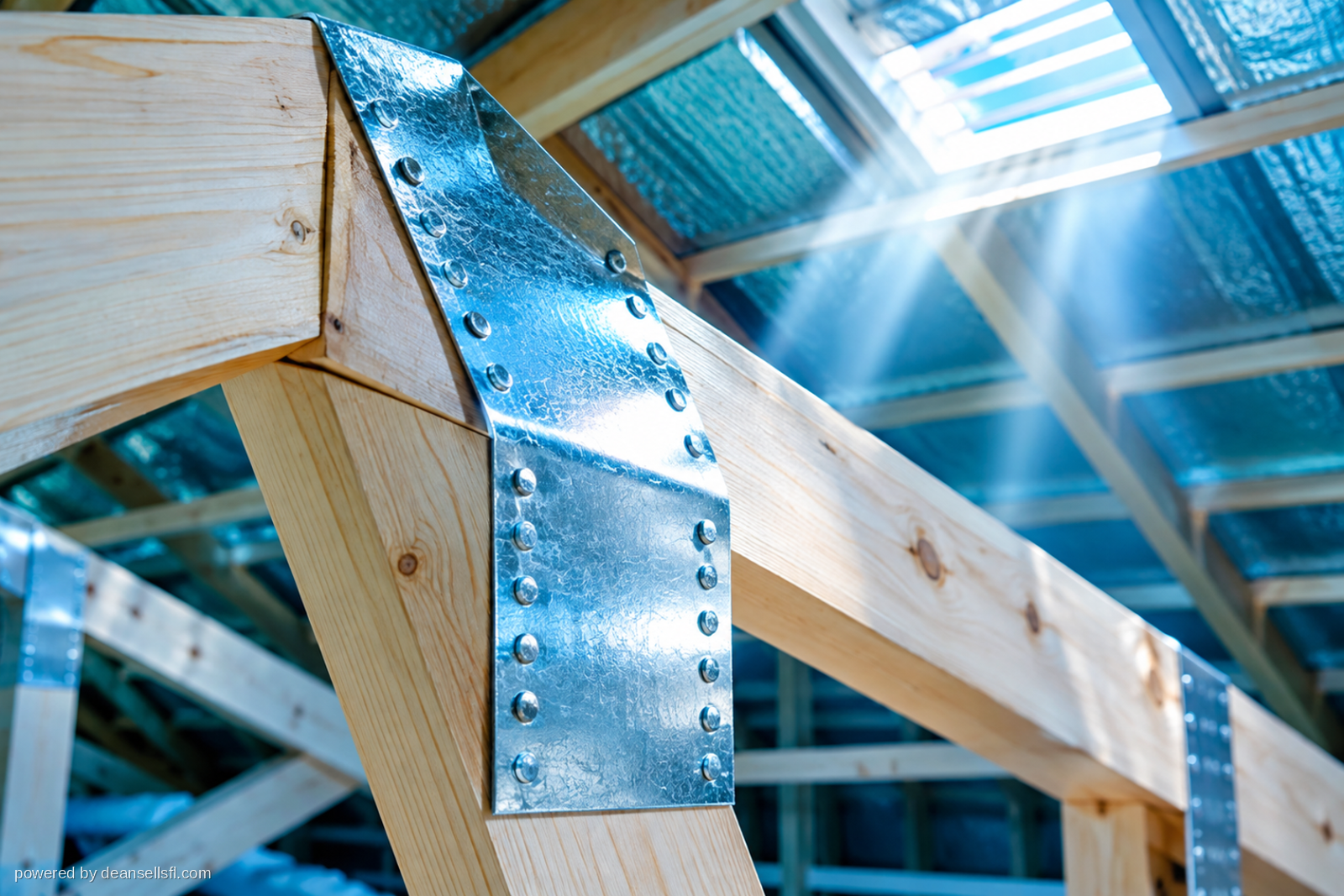
Industry guides rank roof-to-wall attachment among the highest-value lines on the whole form, and it hinges on something small. Walk into many older South Florida attics and you’ll find metal clips or straps tying the trusses to the walls. Good news, until the inspector counts the nails.
The form only recognizes a connector as a clip, single wrap, or double wrap when at least three nails fasten it to the truss or rafter. With two nails, it rates the same as toe nails, which earns no roof-to-wall credit. Clips hook over the truss; single wraps loop over the top and fasten on one side; double wraps wrap over and fasten on both sides of the wall.
For some homes, correcting that shortfall is a modest attic job rather than a construction project. Have a licensed contractor do the work so it can be documented, then get a fresh inspection. “Before you spend a dollar on the attic, call your agent and ask what that change is worth on your specific policy,” Mr. Kwiatkoski advises. “Then decide.”
Seal the Deck While the Roof Is Open

If your roof is nearing replacement, the next two credits are best claimed while the shingles or tile are off. The first is secondary water resistance, often a self-adhered, peel-and-stick membrane applied directly to the roof deck. If the covering tears off in a storm, the membrane helps keep rain out of the ceilings. One Florida roofing contractor prices peel-and-stick underlayment at roughly $2,000 to $3,500 for a typical home, and notes the credit isn’t automatic. You need the product approval and installation documented.
The second is roof deck attachment: how the plywood sheets are nailed to the trusses. Tighter spacing with 8d ring-shank nails rates meaningfully better than staples or widely spaced smaller nails. When the old roof is off, re-nailing the deck is usually a line item in the roofing contract, so ask for it by name and ask your roofer to photograph it.
This matters most on the Treasure Coast. Much of Port St. Lucie grew out of a General Development Corporation plan that started around 1960, so many older neighborhoods were built well before the statewide Florida Building Code took effect in 2002. Newer Tradition homes often start with stronger features on paper. For an older Port St. Lucie roof coming due, planning the reroof around the wind mitigation form is one of the smartest moves an owner can make.
Opening Protection Without the $20,000 Windows
Opening protection is all-or-nothing on the form: every window, door, skylight, and garage door must be covered by an impact-rated product or rated shutter, or the credit can fall away. Impact glass does the job, but it is not the only option. Florida 2026 installed pricing from one Florida dealer puts steel storm panels at about $150–$300 per window, or roughly $2,000–$7,000 for a typical three-bedroom home, and accordion shutters at about $5,000–$12,000 for the whole house. Permits add $50–$300. Make sure the products are approved for your location; Broward sits in the High-Velocity Hurricane Zone, where approvals are stricter.
| Upgrade | Typical cost | What it can change on the 1802 form |
|---|---|---|
| Wind mitigation inspection | $75–$150 | Documents every credit you already have; report good for 5 years |
| Third nail on existing clips or straps | Labor-based; get 2–3 quotes | Roof-to-Wall: from “Toe Nails” (no credit) to Clips, Single Wraps, or Double Wraps |
| Peel-and-stick secondary water barrier (at reroof) | About $2,000–$3,500 | Secondary Water Resistance: “No” to “Yes” |
| Roof deck re-nailing (at reroof) | Line item in roofing quote | Roof Deck Attachment: moves toward the top level |
| Steel storm panels, every opening | $150–$300 per window; ~$2,000–$7,000 whole house | Opening Protection: all openings covered |
| Accordion shutters, every opening | $300–$700 per window; ~$5,000–$12,000 whole house | Opening Protection: all openings covered |
Costs are published 2026 Florida ranges from contractors and insurance guides; your quotes will vary. Savings depend on your carrier and policy, so ask your agent to price each change before you commit.
My Safe Florida Home in 2026
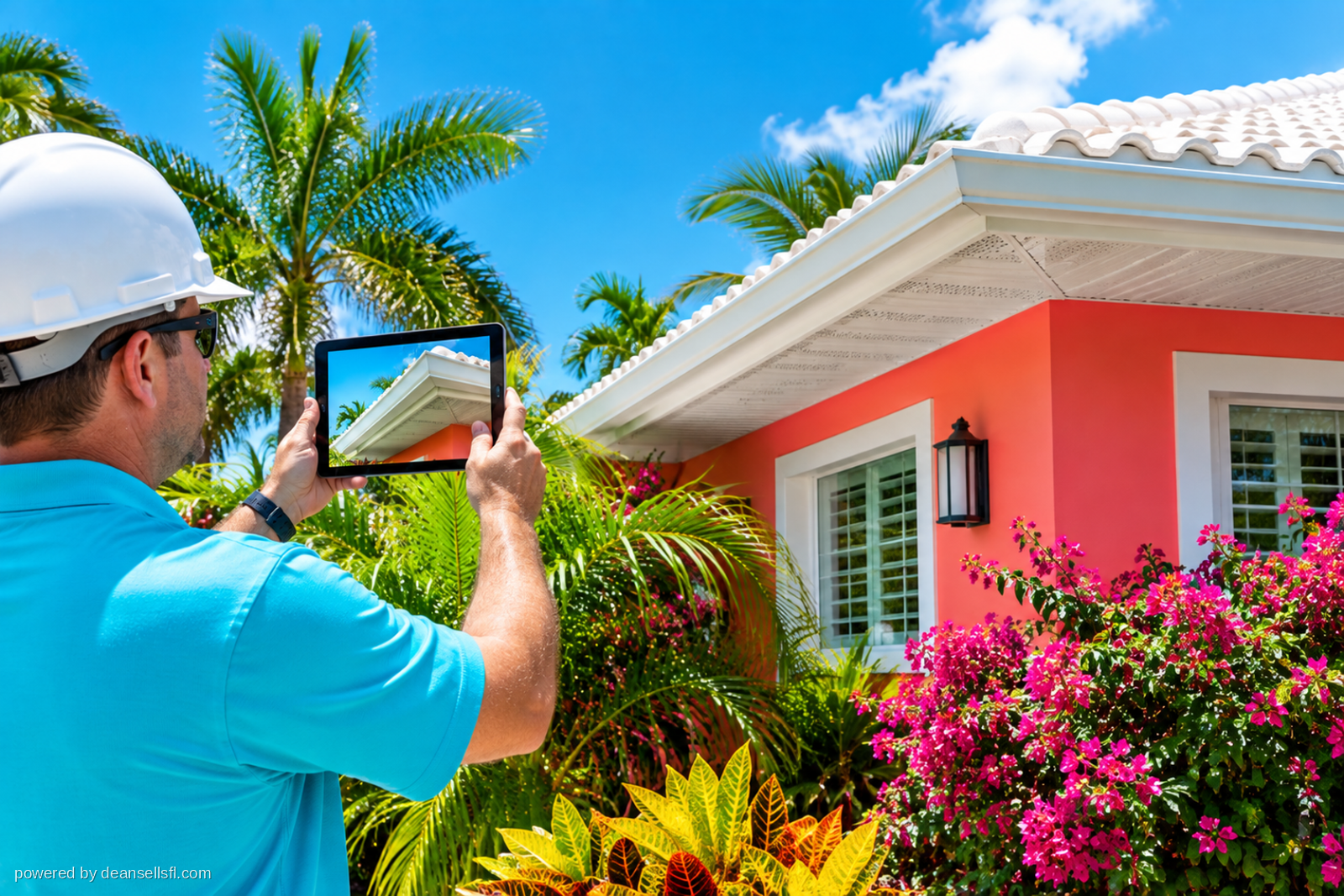
The state’s own hardening program can help pay for much of this. My Safe Florida Home has offered free wind mitigation inspections and grants of up to $10,000 for homesteaded, owner-occupied single-family homes. Moderate-income owners put in $1 for every $2 from the state, and lower-income owners may not need to match at all. Eligible work has included roof-to-wall connections, secondary water resistance, roof improvements, and opening protection such as shutters and impact windows and doors.
According to a June 2026 program update, the state reappropriated $405 million in May to work through the backlog, and applications were open. Funding rounds open, close, and change often, so confirm current status and eligibility at mysafeflhome.com before you plan a project around a grant.
The Mortgage Math: Escrow, Buying Power, and Resale
This is where Mr. Kwiatkoski’s lending years come in. If your insurance is paid through escrow, a lower premium eventually means a lower monthly mortgage payment. Every $1,200 cut from the annual premium is about $100 a month. That usually shows up at the servicer’s next escrow analysis, and some servicers will review sooner if you send the new declarations page and ask.
For buyers, insurance is part of the housing payment lenders use to figure debt-to-income ratio. A home in Delray Beach or Port St. Lucie that insures for less can help a buyer qualify more comfortably, which widens the pool of people who can say yes to it. “Underwriters don’t just look at the price,” Mr. Kwiatkoski says. “They look at the whole payment. A clean wind mitigation report makes a house easier to buy.”
For sellers, a report still inside its five-year window is a strong addition to the listing packet, since a buyer’s insurance agent can often quote from it right away.

Real estate is simpler with someone who's stood on both sides of the table.
I'm Dean Kwiatkoski — a Local Expert with Signature International Real Estate. I've spent over two decades helping buyers & sellers fulfill their real estate dreams. With a mortgage lending background, I have a skillset that most Realtors just don't. That means I don't just sell the home — I understand how an underwriter looks at your transaction. Meaning, I will help you secure a buyer who doesn't just want your home, but can actually cross the finish line.
Over two decades of experience in the real estate industry. His strong background in finance and loan origination, coupled with exceptional negotiation skills, sets him apart.
Frequently Asked Questions
How much does a wind mitigation inspection cost in Florida?
Typically about $75 to $150, and the report is valid for five years. When funded, My Safe Florida Home has offered the inspection free to eligible homeowners.
Do I need impact windows to get a wind mitigation discount?
No. Roof shape, roof deck attachment, roof-to-wall connections, and secondary water resistance are rated separately. For openings, rated shutters or storm panels on every opening can qualify too.
Why does a third nail matter on hurricane clips?
The OIR-B1-1802 form counts a clip or strap only if at least three nails fasten it to the truss. With fewer, it is rated like toe nails, which earns no roof-to-wall credit.
Does Citizens Property Insurance accept wind mitigation reports?
Yes. Citizens asks for the OIR-B1-1802 form completed by a qualified inspector and recommends checking with your agent before starting upgrades.
